
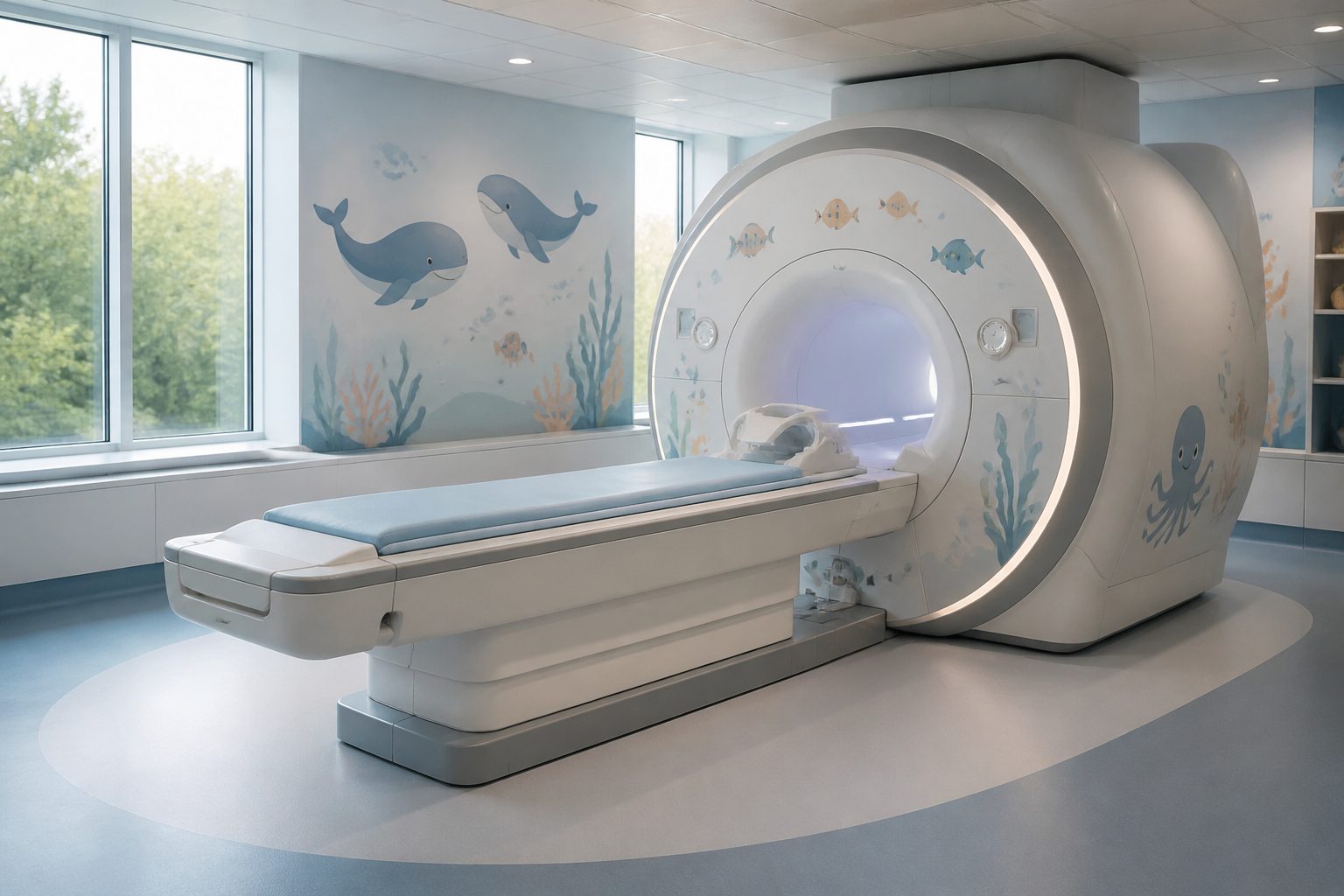
Parents looking for a child MRI scan in France or Spain can expect costs between $500 and $1,800, depending on the hospital, sedation, and insurance coverage. Both countries offer high-quality paediatric imaging services, but knowing what’s included and what to expect can help families plan and avoid surprise costs.
This guide explains what drives child MRI scan costs in France and Spain, how leading children’s hospitals compare, what’s usually included, and how to make the process smoother for your child and your budget.
What is a child MRI scan and when is it needed?
A child MRI (Magnetic Resonance Imaging) scan is a sophisticated, non-invasive diagnostic procedure that uses powerful magnetic fields and radio waves to create highly detailed images of a child’s internal organs, bones, and soft tissues. Unlike X-rays or CT scans, MRI does not expose the patient to ionising radiation, making it a preferred option for paediatric imaging when repeated scans or sensitive areas like the brain and spine are involved.
In paediatric medicine, MRIs are frequently used to investigate a wide range of conditions. These include neurological issues such as seizures, unexplained headaches, developmental delays, and suspected brain or spinal cord abnormalities. MRIs are also valuable for evaluating congenital conditions, tumours, sports injuries, and for monitoring chronic diseases or post-surgical recovery. In both France and Spain, paediatric MRIs are performed using specialised protocols and equipment designed for children—such as smaller coils and child-friendly environments—to ensure comfort and safety.
One of the main challenges with paediatric MRI is the need for the child to remain completely still during the scan, which can last anywhere from 20 minutes to over an hour. For younger children or those with anxiety, sedation or anaesthesia may be necessary to obtain clear images. The decision to use sedation is made based on the child’s age, ability to cooperate, and the complexity of the scan. This requirement is a key factor that can increase both the complexity and the cost of the procedure.
Ultimately, the decision to order an MRI is made by a paediatrician or specialist after careful clinical evaluation, weighing the benefits of detailed imaging against any potential risks or challenges. In both France and Spain, MRI scans are only performed when medically justified, and families should expect a thorough discussion with their healthcare provider about the reasons for the scan and what to expect during the process.
How much does a child MRI scan cost in France and Spain?
The overall cost of a child MRI scan in France and Spain can vary widely due to several influencing factors, including the healthcare facility (public versus private), geographic region, the need for sedation or anaesthesia, and whether the patient is a resident or an international visitor. In both countries, public health insurance provides broad coverage for citizens and legal residents, meaning that for medically necessary MRIs prescribed by a doctor, there is often little to no out-of-pocket expense—sometimes only a small co-payment or administrative fee (usually under €50).
For international patients or those seeking care at private hospitals and imaging centres, costs are significantly higher but still generally lower than in many other Western European nations. In France, a routine paediatric MRI without sedation typically costs between €500 and €1,100 ($540–$1,200), depending on the region and facility. In Spain, the range is similar, with prices from €460 to €1,100 ($500–$1,200). These prices usually include the scan itself and the radiologist’s interpretation, but not extras like sedation, contrast agents, or follow-up consultations.
If sedation or anaesthesia is required—common for younger children or those with anxiety—the total cost can rise to between €1,400 and €1,650 ($1,500–$1,800), especially at private hospitals or if additional monitoring is needed. The presence of a paediatric anaesthetist, extra nursing staff, or specialized equipment can all add to the final bill. In some cases, international patients may also face administrative fees and be required to pay the full amount upfront.
- Public sector: Minimal or no fees for residents with valid public health coverage; longer wait times are possible.
- Private sector: Faster access, more flexibility, and English-speaking staff, but higher costs and upfront payment expected.
It is advisable for families—especially those traveling from abroad—to request a detailed written estimate before booking, specifying the inclusion of all potential add-ons such as sedation, special contrast agents, and follow-up appointments. This ensures there are no surprises and allows for better financial planning during the child’s diagnostic process.
Best children’s hospitals for MRI scans in France and Spain
France and Spain both boast a network of highly regarded children’s hospitals and paediatric imaging centres, particularly in major cities. In France, top institutions such as Hôpital Necker-Enfants Malades in Paris and Hôpital Femme Mère Enfant in Lyon are recognized for their advanced paediatric radiology departments, offering state-of-the-art MRI technology, child-friendly environments, and teams of paediatric radiologists and anaesthetists. These hospitals are equipped to provide sedation or anaesthesia safely and have protocols tailored specifically for children, minimizing stress and ensuring the best possible imaging quality.
In Spain, leading facilities like Hospital Sant Joan de Déu in Barcelona and Hospital Universitario La Paz in Madrid are internationally known for paediatric care. These hospitals have dedicated international patient offices, English-speaking staff, and child life specialists who help prepare children and families for the MRI experience. Both countries’ public hospitals are accredited by national health authorities (such as HAS in France and the Ministry of Health in Spain), ensuring high standards of safety and quality. Some centres also hold international accreditations like Joint Commission International (JCI) or are affiliated with prestigious universities, which is often a mark of excellence in paediatric medicine.
- Public hospitals: Offer comprehensive care and advanced imaging but may have longer waiting times for non-urgent scans, especially for international or non-resident patients. Booking in advance is essential, and some hospitals prioritize urgent or complex cases.
- Private hospitals and imaging centres: These facilities usually offer faster appointment scheduling, more personalized service, and greater flexibility for international families. They may also provide more comfortable amenities, child-friendly waiting areas, and streamlined billing for non-residents. However, the cost is typically higher than in public institutions.
When choosing a hospital, families should consider not only the cost and speed of service but also whether the facility has experience with paediatric imaging, the availability of sedation, and support for international patients. Contacting the hospital’s international office in advance can help clarify language support, payment procedures, and any documentation required for your child’s appointment.
What’s included in the price—and what’s not
When you receive a quote for a child MRI scan in France or Spain, it’s important to understand exactly what is covered in the base price and which services may incur additional charges. Typically, the quoted fee includes the MRI scan itself, which involves the use of highly specialized imaging equipment, as well as the radiologist’s report interpreting the results. In public hospitals, the cost often covers a basic pre-scan consultation, where a healthcare professional explains the procedure, and the administration of a standard contrast agent if required for the study. These inclusions are generally consistent across most public healthcare facilities in both countries.
However, there are several common exclusions that can significantly impact the final bill. For instance, sedation or anaesthesia—often necessary for younger children who may have difficulty remaining still—can add anywhere from $200 to $600 (or €180–€550) to the total cost, depending on the complexity and the need for a paediatric anaesthetist. A pre-scan assessment by a paediatrician or anaesthetist, which may be mandated for children with specific health concerns, is usually billed separately. If a specialised contrast agent is needed, particularly for more complex neurological or abdominal scans, this may also result in an extra charge.
- Printed images or digital copies: While images are typically sent directly to the referring doctor, families who want their own copies—either printed or on CD/USB—should anticipate an additional fee, which can vary from €10 to €50.
- Follow-up consultations: A post-scan appointment to discuss results with a specialist is rarely included in the initial price and is often charged separately, especially in private centres.
Private imaging centres sometimes offer bundled packages that may include some of these extras, but policies differ widely, so it’s crucial to request a detailed written estimate before your appointment. International patients, in particular, are almost always required to pay the estimated total upfront and should clarify what is—and isn’t—covered to avoid unexpected expenses. Always ask for an itemized breakdown and check if your insurance or embassy can assist with direct billing or reimbursement options.
How France and Spain compare: price, access, and quality
France and Spain both offer excellent paediatric imaging, but there are differences in process and cost. France’s public healthcare system covers most costs for residents, but non-residents or those using private care will pay more. Spain’s public system is similar, but some regions have longer wait times for non-emergency scans. Private hospitals in both countries provide faster access and more amenities, but at a higher price.
Quality of care is comparable, with experienced paediatric radiologists and modern equipment standard in major centres. Language can be a barrier in smaller cities, though most large hospitals have English-speaking staff. For families travelling from abroad, both countries have established medical travel infrastructure, though France has more international paediatric centres in Paris and Lyon, while Spain’s top options are in Madrid and Barcelona.
| Country | Typical cost (no sedation) | With sedation | Wait time (public) | Top paediatric centres |
|---|---|---|---|---|
| France | $500–$1,200 (€460–€1,100) | $1,200–$1,800 (€1,100–€1,650) | 2–8 weeks | Necker–Enfants Malades (Paris), Hôpital Femme Mère Enfant (Lyon) |
| Spain | $500–$1,100 (€460–€1,000) | $1,100–$1,600 (€1,000–€1,450) | 2–12 weeks | Hospital Sant Joan de Déu (Barcelona), Hospital Universitario La Paz (Madrid) |
What drives the price of a child MRI scan?
Several factors influence the price of a paediatric MRI scan in France and Spain:
- Hospital type: Private hospitals and imaging centres charge more than public facilities, but may offer faster appointments and more amenities.
- Sedation or anaesthesia: Young children often need sedation for MRI scans, which adds to the cost due to anaesthetist fees and extra monitoring.
- Scan complexity: MRIs of the brain, spine, or joints are standard, but full-body or highly specialised scans (e.g., cardiac MRI) may cost more.
- Contrast agent: Some scans require contrast injection, which can add $50–$150 (€45–€140) to the bill.
- Insurance coverage: Residents with public health coverage pay little or nothing, while international or private patients pay the full rate.
- Location: Major cities may have higher prices but more advanced facilities. Rural hospitals may have lower prices but less paediatric expertise.
How to choose a hospital or imaging centre
When selecting a hospital or imaging centre for a child MRI scan in France or Spain, consider these points:
- Paediatric expertise: Choose a centre with dedicated paediatric radiologists and anaesthetists, especially if your child needs sedation.
- Accreditation: Look for hospitals accredited by French or Spanish health authorities, and with a track record in paediatric care. International accreditations (like JCI) are a bonus.
- Support services: Facilities with child life specialists, play areas, and distraction techniques can reduce anxiety and improve scan quality.
- Language and communication: Ensure staff can communicate in your preferred language, especially if you are travelling from abroad.
- Cost transparency: Request a written quote that details what is and isn’t included. Ask specifically about sedation, contrast, and follow-up costs.
Families travelling for care should also ask about international patient coordinators, medical translation, and assistance with local logistics.
How to save money safely on child MRI scans
There are safe ways to reduce the cost of a child MRI scan without compromising quality:
- Use public hospitals: If you are eligible (resident or with reciprocal agreements), public hospitals offer the lowest prices.
- Ask about sedation alternatives: Some children may not need full sedation; ask about child-friendly techniques, movie goggles, or mild sedation if appropriate.
- Compare multiple quotes: Prices can vary widely between private centres. Ask for detailed quotes and compare inclusions.
- Check with your insurer: Some international health plans cover overseas scans if medically necessary. Check coverage and claim procedures in advance.
- Schedule in advance: Non-urgent scans can often be scheduled with more flexibility, possibly reducing costs.
Avoid very low-cost offers from centres without paediatric accreditation or unclear safety standards. The expertise and safety of the team are crucial for children, especially if sedation is required.
Other paediatric costs to consider
When planning for a child’s MRI scan in France or Spain, families should be aware that the scan itself is just one component of the overall healthcare journey. Several additional expenses can arise before, during, and after the imaging appointment, and these can vary significantly depending on whether you are accessing care through the public or private sector, as well as your residency status.
- Initial paediatrician consultation: Before an MRI can be ordered, a paediatrician or specialist consultation is often required to assess the child’s symptoms and determine the necessity of advanced imaging. In France, this visit typically costs €50–€100, while in Spain, it may range from €60–€150 for private patients. For international families, these fees are almost always out-of-pocket.
- Follow-up specialist visits: After the MRI, additional appointments may be needed to review the results with a paediatric neurologist, orthopaedist, or other specialist. Each visit can cost €80–€200 depending on the provider and complexity of care.
- Travel and accommodation: Especially for families traveling from rural areas, overseas, or neighboring countries, costs can include train or plane tickets, taxis, and hotel stays. Major cities like Paris, Lyon, Madrid, and Barcelona have accommodation options near hospitals, but prices can be high during peak periods.
- Additional diagnostic tests: Depending on the child’s condition, further tests such as blood work, X-rays, or ultrasound may be recommended as part of a comprehensive diagnostic approach. These tests are usually billed separately, with costs ranging from €30 to €200 each.
- Translation and interpretation services: While many major hospitals have English-speaking staff, some families may require professional medical interpreters, especially for complex discussions. Fees for translation services typically range from €30–€70 per hour, and advance booking is advised.
It’s important to confirm with your chosen hospital or clinic exactly which services are included in the quoted MRI price and which are not. For international patients, some private hospitals offer bundled packages that may include consultations and translation, but public hospitals almost always require separate payments for each service. Planning ahead and requesting a written estimate can help families avoid unexpected expenses and ensure a smoother experience during what is often a stressful time.
Frequently asked questions
How do I book a child MRI scan as an international patient?
Contact the hospital’s international patient office, which can guide you through referral requirements, scheduling, documentation, and payment. Provide your child’s medical records and details of any prior imaging or diagnoses to streamline the process.
Is sedation always required for children during MRI scans?
Sedation is not always required. Older children who can remain still may not need it. For younger children or those with anxiety, sedation or general anaesthesia is sometimes necessary to ensure clear images. Discuss options with the hospital in advance.
Will my insurance cover a child MRI scan in France or Spain?
Coverage depends on your insurance policy. Residents with public insurance usually pay little or nothing for medically necessary scans. International patients should check with their insurer for overseas coverage and pre-approval requirements.
How soon will we get the MRI results?
In most hospitals, a radiologist’s report is ready within 1–3 days. Some private centres offer same-day or next-day results. For urgent cases, results can be expedited. Always ask about turnaround times when booking the scan.
Are MRI scans safe for children?
Yes, MRI scans do not use ionising radiation and are considered safe for children. The main risks relate to sedation or anaesthesia, which are minimised in experienced paediatric centres. Always inform staff of any allergies or medical conditions before the scan.
Related guides
Disclaimer: Prices and details in this article are indicative and may vary by hospital, region, and individual case. Always request a written quote and consult a qualified paediatrician or radiologist before proceeding with any medical imaging or treatment abroad.