
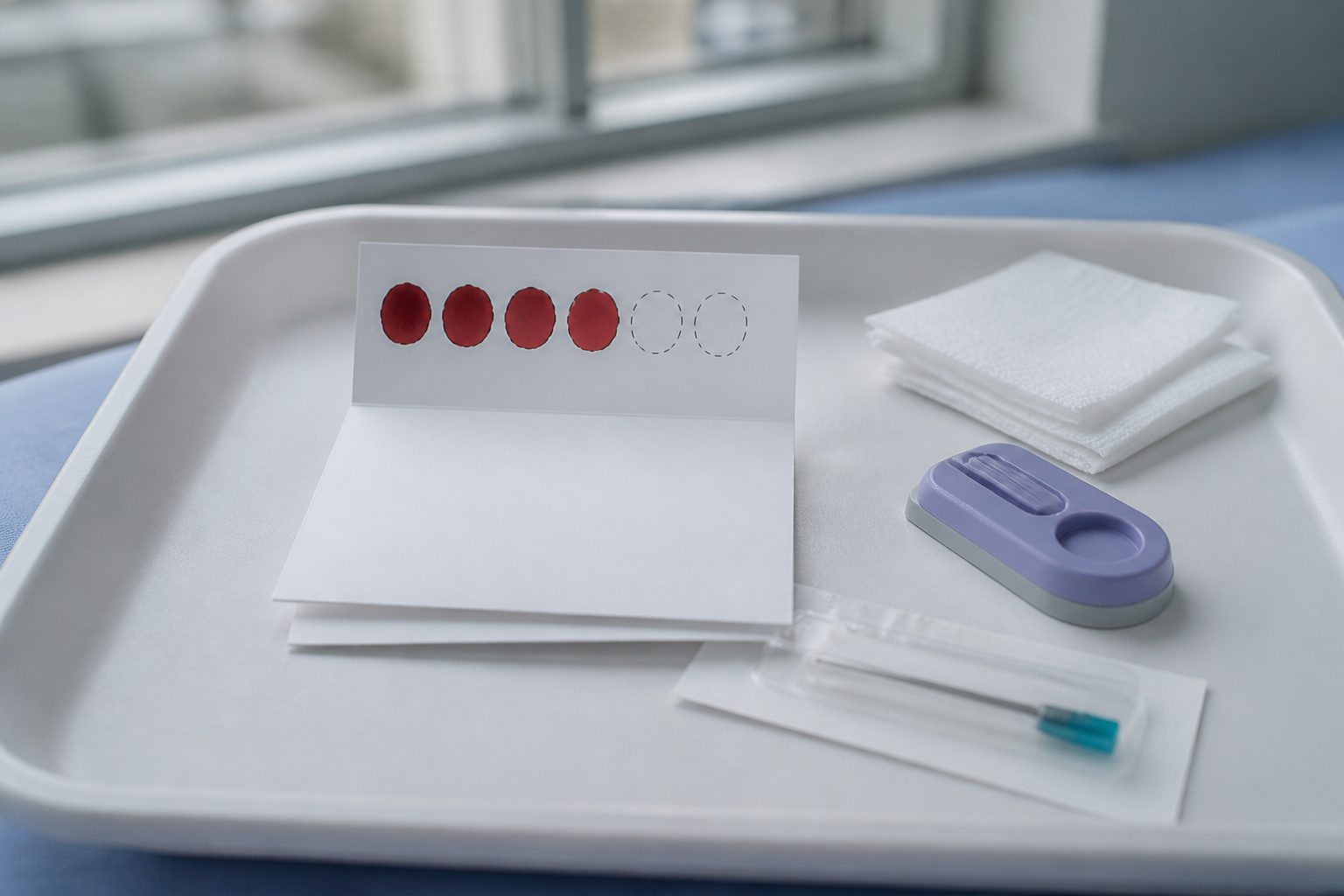
The newborn blood spot test, often called the heel prick test, is a routine screening for babies in Thailand. For most families, the cost ranges from $10 to $35 (฿350–1,200) at public hospitals, while private facilities may charge higher fees.
This guide explains what you pay for, what’s included, how fees differ between Thai public and private hospitals, and how to make sure your baby gets the right tests at a fair price. It’s aimed at parents in Thailand or those considering giving birth in Thailand, especially international families seeking clarity on paediatric care costs.
What is the newborn blood spot test?
The newborn blood spot test is a standard screening performed on all newborns in Thailand between 48 and 72 hours after birth. A nurse or technician collects a few drops of blood from your baby’s heel onto a special filter paper card. The samples are sent to a laboratory for analysis. The test checks for a set of rare but serious metabolic, endocrine, and genetic disorders. Early detection allows for prompt treatment and can prevent severe health problems or disability.
In Thailand, the Ministry of Public Health sets a national screening panel, with some hospitals offering extra tests for additional fees. The most common disorders screened include congenital hypothyroidism, phenylketonuria (PKU), and congenital adrenal hyperplasia. Some private hospitals may offer expanded panels including galactosemia, G6PD deficiency, or cystic fibrosis.
Typical fees for the newborn blood spot test in Thailand
The cost of the newborn blood spot test varies based on the hospital’s status (public or private), the number of disorders screened, and whether you are a Thai national or an international patient. The following table compares prices at leading public and private hospitals in Thailand and selected countries in Asia and beyond, giving you a sense of what to expect.
| Country | Typical cost (USD) | Typical cost (local) | Panel size | Private sector premium? |
|---|---|---|---|---|
| Thailand (public) | $10–$35 | ฿350–1,200 | 3–5 conditions | None |
| Thailand (private) | $35–$90 | ฿1,200–3,200 | 3–10+ conditions | Yes |
| India (private) | $12–$45 | ₹1,000–3,800 | 3–50 conditions | Yes |
| Philippines (private) | $13–$40 | ₱700–2,200 | 6–28 conditions | Yes |
| Singapore | $25–$80 | S$35–110 | 3–30+ conditions | Yes |
| UK (NHS) | Free | Free | 9 conditions | No |
| USA | $30–$150 | $30–$150 | 29–60+ conditions | Yes |
| Australia (public) | Free | Free | 25+ conditions | No |
What is included in the price?
When considering the cost of the newborn blood spot test in Thailand, it’s important to understand exactly what the quoted price covers, as inclusions can differ between public and private hospitals. In most public hospitals, the standard fee is designed to be affordable and typically encompasses the entire process from sample collection to initial follow-up. Here’s what is generally included:
- Blood sample collection (heel prick): A nurse or trained technician performs a heel prick to collect a few drops of your baby’s blood, using sterile equipment and following strict hygiene protocols. The cost covers all necessary materials, such as lancets, collection cards, and gloves.
- Laboratory analysis: The blood sample is sent to an accredited laboratory, where it is tested for the core conditions mandated by Thailand’s Ministry of Public Health. The standard national panel usually screens for 3–5 inherited metabolic disorders, such as congenital hypothyroidism, phenylketonuria (PKU), and galactosemia. The cost of reagents, lab staff time, and quality control is included.
- Reporting of results: Once analysis is complete, results are sent back to the hospital or directly to your paediatrician. This includes both normal and abnormal results, with basic interpretation provided to your healthcare provider.
- Basic follow-up for abnormal results: If the test indicates a possible disorder, the hospital will contact you for further instructions. Basic counselling or a follow-up call is typically included, but additional tests or specialist appointments are not.
In private hospitals, the base price may only cover the standard panel, but additional fees often apply for expanded screening (testing for more disorders), administrative processing, or in-depth report consultations. Some facilities bundle the test with delivery or postnatal care packages, so it’s wise to check if you are already covered. If your baby’s result is abnormal, further confirmatory laboratory tests, advanced genetic screening, or appointments with specialists (such as endocrinologists or geneticists) are almost always billed separately. These additional steps can incur significant extra costs, especially in private settings.
To avoid confusion, always ask for a written breakdown of what is included in the quoted price. This will help you compare options between hospitals and ensure you are fully prepared for any additional charges that might arise during your baby’s care journey.
Hidden costs and extra charges
While public hospitals in Thailand strive to keep newborn blood spot screening fees transparent and affordable, there are several scenarios where families may encounter additional or unexpected expenses. Understanding these potential hidden costs will help you budget more accurately and avoid surprises as you navigate your baby’s early healthcare journey.
- Expanded screening panels: The standard government-subsidized panel covers only a handful of core conditions. If you request expanded screening for a wider range of metabolic or genetic disorders—an option more commonly available at private hospitals or for families with specific risk factors—expect to pay an extra $15–$60 (฿500–2,000) depending on the number and type of additional tests.
- Repeat or inadequate samples: Occasionally, the initial blood sample may be insufficient or compromised, requiring a repeat test. While rare, this can incur an additional charge of $5–$15 (฿150–500), particularly in private hospitals or clinics.
- Follow-up consultations: If an abnormal result is detected, you may be referred to a paediatrician or specialist for further assessment. In private hospitals, each consultation can cost $20–$60 (฿700–2,000) or more, especially if multiple visits or advanced diagnostics are needed.
- Advanced genetic or metabolic testing: For babies with positive or ambiguous results, further confirmatory tests—such as molecular genetic panels or specialized metabolic assays—can be expensive, sometimes costing several hundred dollars (฿5,000–20,000) depending on the complexity and technology involved.
International families, or those without Thai national health coverage, may also be subject to higher rates or required to pay a deposit upfront, particularly in private or international hospitals. Some hospitals offer bundled maternity or newborn care packages that include the blood spot test, but these may not cover expanded panels or follow-up services. Always request an itemized bill and clarify exactly what is included in any package you purchase.
To minimize hidden costs, ask your hospital for a clear, written breakdown of all possible fees before your baby’s screening. This proactive approach ensures you’re fully prepared for both routine and unexpected expenses, helping you make the best choices for your family’s health and finances.
How to save on newborn screening in Thailand
For most families, the best way to avoid high costs is to use a reputable public hospital, which will offer the national panel at a regulated price. If you are delivering at a private hospital, clarify in advance whether the newborn screening is bundled into your delivery package or charged separately. Ask for a breakdown of what the standard and expanded panels include, and compare prices between facilities if you wish to add extra conditions.
Some expats or medical tourists may be eligible for local rates at public hospitals, especially if they have social security, Thai health insurance, or are married to a Thai citizen. If you need expanded screening but are concerned about the price, consider having the sample collected at your hospital and sent to a reputable external laboratory, which may offer a broader panel at a lower fee.
What to ask your hospital before the test
Before proceeding with your baby’s newborn blood spot test, it’s essential to gather detailed information from your hospital to prevent misunderstandings and unexpected expenses. The cost structure and process can vary widely, especially between public and private facilities in Thailand, so being proactive with your questions will help you make informed decisions. Here are key questions and practical steps to take:
- Which conditions are included in the standard screening panel? Ask for a list of disorders covered in the basic test. In Thailand, the national panel typically checks for 3–5 core conditions, but some hospitals may offer optional expanded panels for an extra fee.
- Is the quoted price fixed, or are there circumstances where it could increase? Clarify whether the fee is all-inclusive or if there are potential add-ons, such as charges for additional laboratory processing, administrative fees, or after-hours collection.
- Are expanded screening options available, and what are their costs? If you wish to screen for a broader range of conditions (such as cystic fibrosis or additional metabolic disorders), ask for a menu of tests and their respective prices.
- What is the process for receiving results? Will results be given in person, by phone, or via a secure online portal? Ask how long it typically takes to receive results and if there are any extra charges for expedited processing or detailed consultations with a paediatrician.
- What happens if a result is abnormal? Find out who will contact you, what immediate steps will be taken, and whether initial counselling is included. Ask about the costs of any repeat or confirmatory tests, as well as referrals to specialists, which are often not covered in the original fee.
- Are repeat tests ever necessary, and are these covered? In rare cases, a repeat blood spot test may be needed if the first sample is inadequate or inconclusive. Confirm whether the cost of a repeat test is included or billed separately.
Request written confirmation of all answers, ideally as part of your hospital’s maternity or newborn care package documentation. This will help you budget accurately and avoid any financial surprises during your baby’s first weeks of life. Clear communication with your care team is the best way to ensure a smooth, transparent newborn screening experience.
How newborn screening fits into paediatric care in Thailand
Newborn blood spot screening is a foundational element of paediatric care in Thailand, integrated into a broader framework of routine health checks and preventive services for infants. The Thai Ministry of Public Health mandates this screening for all newborns, regardless of family history or risk factors, as early detection of certain congenital and metabolic disorders can have a profound impact on a child’s long-term health outcomes.
After birth, babies in both public and private hospitals undergo a series of standard assessments. These typically include a thorough physical examination, hearing screening (often performed before discharge), and measurement of vital signs and growth parameters. The newborn blood spot test is usually performed within the first 48 hours of life, as this timing maximizes the accuracy of detecting metabolic and endocrine disorders before symptoms appear.
In addition to screening, parents should familiarize themselves with Thailand’s national immunisation schedule. Public hospitals provide several vaccines free of charge, including hepatitis B (often given at birth), BCG for tuberculosis, DTP (diphtheria, tetanus, pertussis), polio, and others administered at specific intervals during infancy. However, some important vaccines—such as rotavirus, pneumococcal conjugate (PCV), and influenza—may not be included in the free government program and could incur additional costs, especially in private settings. These extra vaccines can be essential for comprehensive protection but may add several thousand baht to your baby’s healthcare expenses over the first year.
To ensure your child receives all recommended care, request a written schedule and itemized price list from your hospital. This should outline not only the newborn blood spot test but also all other routine checks, vaccinations, and any follow-up consultations. Understanding how newborn screening fits into the larger context of paediatric care will help you plan for both your baby’s health and your family’s budget, ensuring no critical steps are missed in those important early months.
Frequently asked questions
Is the newborn blood spot test mandatory in Thailand?
The test is strongly recommended and routinely performed at all public and most private hospitals. While not legally mandatory, it is part of the national newborn care protocol.
How soon are results available, and how will I be notified?
In public hospitals, results are usually ready in 7–10 days and reported to the paediatrician or maternity ward. Private hospitals may offer faster processing or direct notification by phone or email.
Can international or non-resident families access public hospital rates?
Yes, but you may need to pay a higher rate or provide proof of local insurance or residency. Always confirm eligibility and get a written quote.
What happens if my baby gets a positive or abnormal result?
The hospital will contact you for repeat or confirmatory testing and refer you to a specialist. Follow-up care and further tests are usually not included in the initial fee and are billed separately.
Are expanded newborn screening panels necessary?
The standard panel covers the most serious and treatable conditions. Expanded screening may be useful for families with a history of rare disorders or if recommended by your doctor, but it adds to the cost.
The bottom line: Ensuring affordable newborn screening in Thailand
Thailand’s healthcare system is structured to make essential newborn screening accessible and affordable for the majority of families, with public hospitals offering reliable services at relatively low cost. The standard newborn blood spot test typically costs between $10 and $35 (฿350–1,200) at government hospitals, which includes sample collection, laboratory analysis for the core panel, and basic result reporting. This pricing is kept low to encourage universal uptake and early detection of serious but treatable conditions.
Private hospitals, while offering more amenities and sometimes a broader range of screening options, generally charge higher fees for both the standard and expanded panels. Expanded screening—testing for additional metabolic or genetic disorders—can increase the price significantly, sometimes exceeding $60–$100 (฿2,000–3,500), especially if specialist consultations or advanced laboratory techniques are involved. International families or those seeking care at premium private facilities may also encounter higher rates and additional administrative fees.
To avoid unexpected costs, it is crucial to clarify exactly what is included in your hospital’s newborn screening package. Always request an itemized quote that details the specific tests, reporting methods, and any included follow-up services. Ask about the process and costs for further testing or specialist referrals in the event of an abnormal result, as these are often not covered in the initial fee and can be substantial.
By taking these practical steps—choosing a facility that fits your budget, requesting detailed information in writing, and understanding the pathway for follow-up care—you can ensure your baby receives comprehensive newborn screening without unnecessary financial strain. This proactive approach supports your child’s health and gives you peace of mind during a critical time.
Related guides
Disclaimer: Prices in this guide are indicative and may vary depending on hospital policies, geographic location, and individual medical circumstances. Always consult directly with your chosen facility for an up-to-date written quote, and seek guidance from a qualified paediatrician to address your baby’s unique needs.