
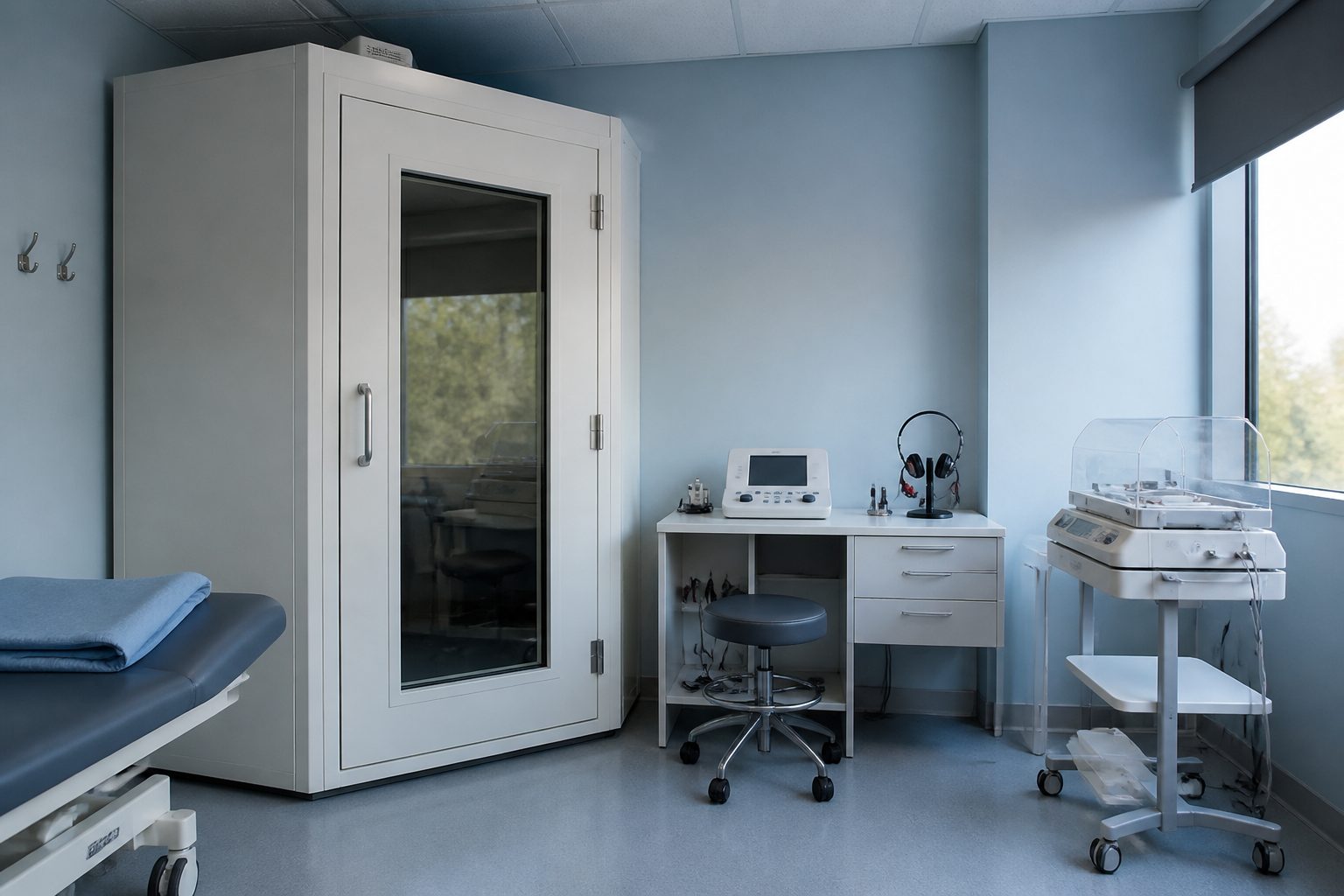
Newborn hearing tests are essential for detecting hearing loss early and supporting a child’s development. In the UK, these tests are provided free on the NHS, while in India, private hospitals and diagnostic centres typically charge $35–$75 (₹2,900–6,200) per screening.
This guide is for parents comparing newborn hearing test options and costs in the UK and India. We cover what’s included, extra fees to watch for, and how to choose the right hospital or clinic for your baby.
What is a newborn hearing test?
A newborn hearing test is a critical screening procedure performed on babies shortly after birth, typically within the first few days of life and ideally before leaving the hospital. The primary aim is to identify any degree of hearing loss as early as possible, since even mild or partial hearing issues can significantly affect a child’s speech, language, and cognitive development. Early detection allows for prompt intervention, which is proven to improve long-term outcomes in language acquisition and social skills.
The two most widely used techniques for newborn hearing screening are the Otoacoustic Emissions (OAE) test and the Automated Auditory Brainstem Response (AABR) test. The OAE test works by placing a tiny, soft earpiece in the baby’s ear canal, which emits clicking sounds and measures the ear’s response. The AABR test uses small sensors placed on the baby’s head and earlobes to monitor brainwave activity in response to sounds. Both methods are completely safe, non-invasive, and painless—most babies sleep through the process or are calm and settled during the test.
In the UK, this screening is standard practice under the NHS Newborn Hearing Screening Programme. In India, the test is increasingly offered in private hospitals and some government facilities, though availability and protocols may vary by region. The process is quick, usually taking only a few minutes per ear, and can be performed while your baby is sleeping or quietly resting. Early screening is essential because it enables families and health professionals to arrange further assessments or interventions if any hearing loss is detected, giving babies the best possible start in life.
Cost of newborn hearing tests: UK vs India
In the UK, all newborns are offered hearing screening free of charge through the NHS Newborn Hearing Screening Programme. Private hospitals and clinics may offer the test for a fee, but most families use the NHS service. In India, newborn hearing screening is increasingly available in major hospitals and private diagnostic centres, but it is not universally free. Costs vary depending on the city, hospital, and whether the test is done as part of a package or as a standalone service.
| Country | Typical provider | Indicative cost (USD) | Indicative cost (local) | Public coverage | What’s included |
|---|---|---|---|---|---|
| UK | NHS hospitals | $0 | £0 | Free on NHS | OAE and/or AABR, full report, referral if needed |
| UK | Private hospitals/clinics | $100–$200 | £80–£160 | No | OAE and/or AABR, report |
| India | Private hospitals/diagnostic centres | $35–$75 | ₹2,900–₹6,200 | No | OAE (sometimes AABR), report |
| India | Public hospitals (select states) | $0–$15 | ₹0–₹1,250 | Limited/free in some states | OAE, referral if needed |
What’s included in the price
The price of a newborn hearing test typically covers several key components, but the exact inclusions can vary depending on the country, hospital, and whether the service is provided publicly or privately. Generally, the standard fee includes:
- OAE and/or AABR screening for both ears: This involves using specialised equipment to quickly assess hearing in both of your baby’s ears, ensuring a thorough check for any potential issues.
- Written or digital test report: After the screening, you will receive a clear summary of the results, either as a printed document or a digital file, which you can keep for your records or share with your paediatrician.
- Immediate feedback from the technician or audiologist: Most hospitals provide instant verbal feedback, explaining the results and next steps, so you know right away if further action is needed.
- Referral advice if the result is not clear or shows possible hearing loss: If the screening suggests a potential problem, you will be given guidance on where to seek a full diagnostic assessment, and in some cases, a formal referral letter.
It is important to note that the basic price usually does not include repeat testing if your baby does not pass the first screen, nor does it cover the cost of in-depth diagnostic assessments required for a confirmed diagnosis of hearing loss. In the UK, the NHS covers all these steps free of charge. In India, private hospitals may charge separately for each stage, and costs can increase if additional tests or consultations are needed. Some hospitals, particularly in India, may bundle the newborn hearing test with other newborn screening packages—such as metabolic, thyroid, or jaundice tests—which can affect the overall price. Always clarify with the provider exactly what is included in the quoted price to avoid unexpected expenses later on.
Hidden and extra costs to check
When evaluating the cost of a newborn hearing test, it’s important to look beyond the initial quoted price and consider potential hidden or additional charges that may arise. These extra costs can vary significantly depending on the country, hospital, and whether you’re using public or private healthcare services. Here are some common extras to watch for and questions to ask your provider:
- Repeat screening: Many babies require a second test due to temporary factors like fluid in the ear or movement during the first screening. Ask whether the cost of a repeat screen is included in the initial price or if it will be billed separately. In India, repeat tests may add $10–$20 (₹800–1,600) per session, while in the UK private sector, additional charges may also apply.
- Follow-up diagnostic tests: If the initial screening suggests a possible hearing issue, a full diagnostic hearing assessment—such as the ABR or BERA test—will be necessary. In India, these advanced tests typically cost $65–$190 (₹5,500–16,000), depending on the hospital and location. In the UK’s private sector, prices range from $200–$500 (£160–400). These are usually not included in the basic screening fee.
- Hospital admission or bed charges: If the hearing test is not performed as part of a newborn care package or during the initial hospital stay, some facilities may charge extra for admission or a day bed. This is more common in private hospitals in India, where such charges can add significantly to the overall bill.
- Consultation fees: Meeting with a paediatrician, audiologist, or ear, nose, and throat (ENT) specialist to discuss the results or plan further assessments may incur additional fees. In India, these consultations can cost $10–$25 (₹800–2,000), while in the UK private sector, specialist consultations are typically higher.
To avoid surprises, always ask for a comprehensive price breakdown before agreeing to the screening. Confirm whether repeat screening, follow-up diagnostics, and specialist consultations are included in the quoted price. Being proactive about these questions can help you budget accurately and ensure your baby receives all necessary care without unexpected out-of-pocket expenses.
How to choose a hospital or clinic
When selecting a provider for newborn hearing screening, consider:
- Accreditation: Look for hospitals accredited by JCI, NABH, or similar bodies. This suggests good clinical standards.
- Paediatric expertise: Choose centres with a strong paediatric or neonatology department, experienced with newborns.
- Equipment: Confirm that the hospital uses modern, well-maintained OAE and/or AABR machines.
- Experience: Ask how many newborn screenings are done per month—a higher volume usually means more experienced staff.
- International patient support: In India, larger hospitals in metro cities are used to working with overseas patients and can help with paperwork and translation.
- Cost transparency: Insist on a written quote covering all possible fees.
In the UK, most families use the NHS service, but private hospitals may be an option for those seeking earlier or faster testing.
Saving safely on newborn hearing screening
To save money without compromising your baby’s care:
- Use the NHS service in the UK where possible—it is free and high quality.
- If giving birth in India, ask if newborn hearing screening is included in the maternity package. Many mid- to high-end hospitals include it.
- For standalone screening, compare quotes from two or three accredited hospitals or diagnostic centres.
- Inquire about bundled newborn screening packages (hearing, vision, metabolic tests) for better value.
- Check if local government hospitals or public health campaigns offer free or subsidised screening, especially in Indian metro cities.
- Always confirm whether repeat tests are included, to avoid surprise bills.
Do not compromise on the quality of equipment or staff to save a small amount—accurate results are crucial for your child’s future development.
What happens if my baby does not pass the test?
If your baby does not pass the initial newborn hearing screening, it is important not to panic—this is a fairly common occurrence and does not necessarily mean your child has permanent hearing loss. Many newborns may require a repeat test due to temporary factors such as fluid or vernix (a waxy coating) in the ear canal, background noise, or the baby moving during the test. In both the UK and India, it is standard to repeat the screening within a few weeks if the first result is unclear or suggests possible hearing issues.
Should your baby not pass the second screening, they will be referred for a comprehensive diagnostic hearing assessment. This next step, often called the Auditory Brainstem Response (ABR) or Brainstem Evoked Response Audiometry (BERA), is more detailed and is conducted by an audiologist or specialist paediatrician. The diagnostic assessment may involve more advanced equipment and can take longer, but it is still safe and non-invasive.
Early identification of hearing loss is crucial because it allows for timely interventions. If a diagnosis is confirmed, your healthcare team will discuss options such as hearing aids, cochlear implants (in severe cases), speech and language therapy, and support from specialist teachers or therapists. In the UK, these services are coordinated by the NHS and local audiology teams, ensuring a smooth pathway for families. In India, the availability of follow-up care may depend on whether you are using public or private healthcare, and costs can vary widely. Acting swiftly on referrals and following up with recommended specialists can make a significant difference in your child’s communication and learning outcomes.
Frequently asked questions
How soon after birth should the hearing test be done?
Newborn hearing screening is ideally done within the first 2–4 days after birth, before leaving hospital. If missed, it can be arranged within the first month. Early testing ensures any issues are detected promptly for early support.
Is the test painful or dangerous for my baby?
No, both OAE and AABR tests are safe, quick, and painless. The test usually takes 5–15 minutes, and most babies sleep through it. There are no risks or side effects associated with newborn hearing screening.
What if I gave birth at home or missed the hospital test?
If you missed the hospital screening, contact your paediatrician or local hospital to arrange an outpatient hearing screen. In India, private diagnostic centres and some government hospitals offer walk-in newborn hearing tests. In the UK, your health visitor can refer you for screening.
How accurate are newborn hearing tests?
These tests are highly accurate for detecting moderate to severe hearing loss present at birth, but may miss very mild cases or issues that develop later. Follow-up and regular hearing checks are recommended if there are any concerns as your child grows.
What if my child needs further hearing care?
If further tests confirm hearing loss, your hospital will refer you to a paediatric audiologist or ENT specialist. Early intervention options include hearing aids, speech therapy, and family support services. Costs for ongoing care vary by country and provider.
The bottom line
Newborn hearing screening is an essential, straightforward test that plays a crucial role in your child’s early development. Detecting hearing loss at birth allows for interventions that can dramatically improve speech, language, and cognitive outcomes, giving children the best chance to reach their full potential. In the UK, this screening is part of routine newborn care and is provided completely free of charge through the NHS, ensuring every baby receives equal access to early detection and follow-up services.
In India, the situation is more varied. While some government hospitals and public health programmes offer free or subsidised screening, many families rely on private hospitals, where the cost typically ranges from $35 to $75 (₹2,900–6,200). These prices can fluctuate depending on the city, the reputation of the hospital, and whether the test is bundled with other newborn checks. It is not uncommon for urban centres and premium hospitals to charge higher fees, while rural or government facilities may offer the service at a lower cost or for free. Regardless of location, it is vital to ask for a detailed breakdown of what the fee includes and whether there are any hidden or extra charges for repeat or follow-up tests.
To ensure you receive accurate results and appropriate care, always choose an accredited provider—whether public or private—and confirm that the staff are trained and the equipment is up to date. Before proceeding, request a written quote, and do not hesitate to ask questions about the process, inclusions, and any additional costs. Remember, investing in early screening can have a lifelong positive impact on your child’s health and development.
Related guides
Disclaimer: Prices and services described here are indicative and may vary based on the hospital, region, and individual circumstances. Always consult with a qualified doctor or audiologist for advice tailored to your child’s needs, and obtain a written estimate before committing to any medical procedure.