
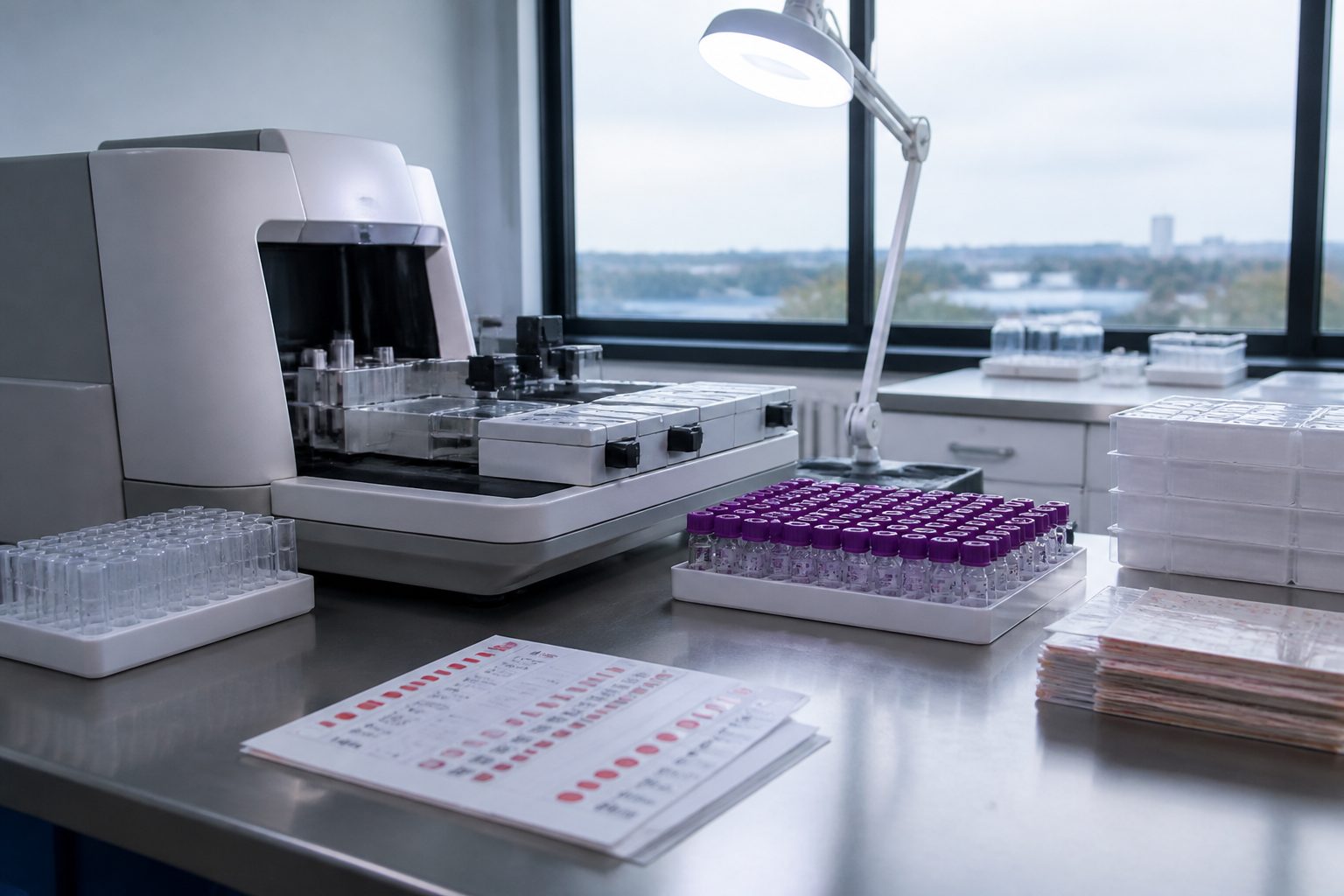
Newborn metabolic screening is a routine test that checks babies for rare but serious genetic and metabolic disorders. In both the UAE and Egypt, this screening is recommended for all newborns, but there are differences in the cost, the range of conditions tested, and how follow-up care is managed.
For families comparing options, the out-of-pocket cost for newborn metabolic screening is typically $50-$70 (EGP 2,400-3,350) in Egypt and $100-$120 (AED 370-440) in the UAE. This guide covers what the screening involves, differences between countries, and how to make sure your baby receives comprehensive care.
What is newborn metabolic screening?
Newborn metabolic screening is a preventive health measure designed to identify certain inherited metabolic and genetic disorders in babies shortly after birth. The process involves taking a few drops of blood from your baby’s heel—commonly known as a heel prick—typically between 24 and 72 hours after delivery. This blood sample is then sent to a specialized laboratory for analysis. The main goal is to detect conditions that, if left untreated, could lead to serious and irreversible health problems such as intellectual disability, developmental delays, organ failure, or even death. Early detection allows doctors to begin treatment—often dietary changes or medication—before symptoms develop, thereby preventing long-term complications.
The specific disorders screened vary by country and healthcare system. For instance, the UAE’s national program covers over 30 conditions, including phenylketonuria (PKU), congenital hypothyroidism, sickle cell disease, cystic fibrosis, and several rare metabolic and endocrine disorders. In Egypt, the public system typically screens for fewer conditions, focusing on the most common and treatable ones like PKU and congenital hypothyroidism, though private hospitals may offer expanded panels for an extra fee. Globally, there is significant variation: some countries test for as few as 5-10 disorders, while others screen for 50 or more, depending on resources and national policy.
Screening is usually mandatory or strongly recommended as part of routine newborn care, and results are typically available within a few days to two weeks. Parents should ensure they receive a copy of the results, understand what was tested, and know the next steps if a positive or inconclusive result is found. Early diagnosis is key to preventing lifelong health issues and giving your child the best possible start.
How newborn screening works in the UAE
In the UAE, newborn metabolic screening is mandatory for all babies born in both public and private hospitals. The test is typically performed before hospital discharge. The standard screening panel covers more than 40 disorders, including metabolic, endocrine, and hemoglobinopathies. The program is regulated by the UAE Ministry of Health and Prevention (MOHAP), and most hospitals are accredited and follow international protocols.
Samples are sent to specialized laboratories, and results are usually available within 7-10 days. If a disorder is detected, parents are contacted and referred to a specialist center for confirmatory testing and follow-up. The cost is often included in maternity packages at private hospitals, but may be charged separately for expatriate families or at certain facilities. For those paying out of pocket, fees range from $100-$120 (AED 370-440).
Newborn metabolic screening in Egypt
Egypt’s Ministry of Health runs a national newborn screening program, primarily in government hospitals and maternity units. The panel covers a smaller range of conditions—typically 3 to 6 disorders, with a focus on congenital hypothyroidism, phenylketonuria, and sometimes galactosemia and sickle cell disease. Some private hospitals offer expanded panels at extra cost.
The heel-prick sample is usually taken within 48 hours of birth. Results can take up to two weeks, depending on laboratory capacity. If a positive result is found, families are contacted by the hospital or local health authority for follow-up. The basic screening is often free or low-cost in public facilities, but private hospitals may charge $50-$70 (EGP 2,400-3,350) for expanded panels. Coverage and follow-up can vary, so parents should ask detailed questions about what is included.
What is included (and not included) in the price?
In both countries, the fee for metabolic screening generally covers the initial blood test and laboratory analysis for the standard panel of disorders. In the UAE, the price often includes automatic referral to a specialist if a disorder is detected, but further diagnostic testing or long-term treatment is not included. In Egypt, the cost covers the basic screening, but families may need to pay separately for expanded panels or any additional diagnostic workup and treatment.
What is not included: repeat testing if the sample is inadequate, confirmatory genetic testing, ongoing specialist consultations, special dietary formulas, or medications. Parents should check with the hospital or clinic about the full scope of services covered by the screening fee, especially if using private facilities.
Cost comparison: UAE vs. Egypt and other countries
| Country | Standard panel size | Typical cost (USD) | Local currency | Notes |
|---|---|---|---|---|
| UAE | 40+ disorders | $100-$120 | AED 370-440 | Mandatory; included in some private maternity packages |
| Egypt | 3-6 disorders (public); up to 35 (private) | $50-$70 (public); $80-$130 (private/expanded) | EGP 2,400-4,200 | Expanded panels at extra cost in private hospitals |
| USA | 30-60 disorders (varies by state) | $60-$150 | USD | Usually covered by insurance |
| UK | 9 disorders | Free | GBP | NHS covers all costs |
| India | 2-70+ (varies, mostly private) | $20-$100 | INR 1,700-8,400 | Public programs limited; private labs offer expanded panels |
| Philippines | 6-29 disorders | $20-$60 | PHP 1,100-3,300 | Cost varies by hospital and panel size |
| Bangladesh | 2-4 disorders | $10-$25 | BDT 1,100-2,800 | Public programs limited; expanded panels rare |
| Pakistan | 2-5 disorders | $15-$30 | PKR 4,200-8,400 | Private hospitals offer expanded screening at extra cost |
What drives the cost of newborn metabolic screening?
The main factors affecting price are the size of the screening panel (number of disorders tested), whether the screening is performed in a public or private facility, and whether the program is subsidized by the government. In the UAE, the larger, more comprehensive panel and advanced laboratory infrastructure contribute to higher costs. In Egypt, public hospitals offer a basic panel at lower cost, while private hospitals charge more for expanded testing and faster turnaround.
Other factors include laboratory accreditation, use of advanced technology (such as tandem mass spectrometry), and whether the price includes follow-up consultation. International accreditation (such as JCI) may add to the cost but can also indicate higher quality standards.
How to choose a hospital or laboratory
Selecting the right hospital or laboratory for your baby’s metabolic screening is a crucial decision that can impact the accuracy, speed, and scope of the results. Start by researching which facilities offer the most comprehensive screening panels. In the UAE, many private hospitals provide expanded panels covering over 30 disorders, while public hospitals may offer a more basic set. In Egypt, public hospitals focus on the most common disorders, but some private clinics and specialized labs offer broader panels for an additional fee. Ask for a full list of the disorders included in each panel, and inquire about the possibility and cost of adding extra conditions if your family has a relevant medical history.
- Panel size: Confirm the number and type of conditions screened, and whether expanded or targeted panels are available for an extra fee.
- Accreditation: Choose hospitals or labs accredited by recognized international or national bodies, such as the Joint Commission International (JCI) in the UAE, or the Egyptian Ministry of Health. Accreditation helps ensure quality and reliability.
- Turnaround time: Ask how quickly you’ll receive results—some private UAE hospitals offer results within 48 hours for an extra charge, while public hospitals may take a week or more.
- Follow-up care: Check if the facility provides in-house genetic counseling, direct referral to metabolic specialists, and clear protocols for managing positive or inconclusive results. This is especially important if you are new to the country or do not speak the local language fluently.
- Cost transparency: Request a detailed written estimate of all costs, including the screening itself, any potential repeat tests, specialist consultations, and follow-up care. Confirm what is included in your insurance or maternity package, and clarify any out-of-pocket expenses in advance.
For expatriate families or those with international insurance, verify that the hospital or lab follows national newborn screening guidelines and that the results will be accepted by pediatricians in your home or destination country. Also, ensure that you receive official, transferable documentation of the results for your records and future healthcare needs.
What to ask before your baby’s screening
To ensure you are fully prepared and avoid unexpected costs or confusion, it’s crucial to ask targeted questions before your baby undergoes metabolic screening. Start by requesting a detailed list of the disorders included in the screening panel—some hospitals, especially in the UAE, offer expanded panels for an additional fee, while public hospitals in Egypt may focus on a smaller set of the most common conditions. Knowing exactly what is being tested will help you assess whether additional or private testing is needed, especially if you have a family history of rare metabolic disorders.
- Which disorders are included in the screening panel, and are expanded or targeted panels available?
- Is the screening cost covered by insurance, included in the delivery or maternity package, or will there be separate charges? Confirm with your insurance provider or hospital billing office to avoid surprises.
- How and when will you receive the screening results? Will they be delivered via phone, email, or in person, and how long does it typically take? Faster turnaround times may be available at extra cost in private UAE hospitals.
- What is the protocol if a positive or inconclusive result is found? Ask about the steps for confirmatory testing, referral to specialists, and whether these follow-up services are included in the initial fee.
- Are there any additional fees for repeat samples, follow-up tests, genetic counseling, or specialist visits?
It’s also wise to ask about the process if the initial blood sample is inadequate or contaminated—will you be notified promptly, and will there be extra costs for a repeat test? Finally, always request a written or digital copy of your baby’s screening results for your own records. This is especially important for families who may relocate or need to share medical information with different healthcare providers in the future.
How to save on newborn screening costs
In Egypt, using public hospitals for the initial screening is the most cost-effective option, as the government covers most of the cost. In the UAE, costs may be lower if the screening is included in your delivery package or covered by insurance. If you opt for an expanded panel at a private hospital, ask if discounts are available for early booking or bundled maternity services.
In both countries, avoid unnecessary repeat testing by ensuring the sample is collected properly and at the recommended time. If you have a family history of a specific disorder, discuss with your doctor whether targeted genetic testing might be appropriate, as this can sometimes be more cost-effective than broad panels.
Planning tips for international families
If your family is relocating between the UAE and Egypt, or moving from another country, careful planning around newborn metabolic screening is essential to ensure continuity of care and compliance with local health regulations. Screening protocols, the range of conditions tested, and the format of medical records can differ significantly from country to country. For example, the UAE’s panel is broader than Egypt’s, and both may differ from the panels in Europe, North America, or Asia. Before your move, request a detailed, official copy of your child’s screening results—preferably in English and stamped by the hospital or laboratory. This documentation will help your new pediatrician in the UAE or Egypt understand your child’s health background and determine if additional or repeat screening is necessary to meet local guidelines.
Some rare metabolic or genetic disorders may not be included in the standard screening panels offered in either country. If your family has a history of inherited disorders, or if parents are closely related (consanguinity), discuss the possibility of expanded or targeted genetic screening with a pediatrician who has experience with international protocols. In the UAE, private hospitals often offer these expanded panels for an additional cost, while in Egypt, you may need to seek out specialized private laboratories. Clarify in advance what the expanded panel includes, how much it costs, and whether your health insurance will cover any part of the expense. Also, ask about referral pathways: if a screening result is abnormal, how will your child be referred for specialist care, and will language or documentation differences cause delays?
Finally, keep all medical records, including screening results, immunization records, and any follow-up reports, organized and accessible. This will make future healthcare visits smoother, especially if you move again or need to consult with specialists in different countries.
Bottom line: What parents should remember
Newborn metabolic screening is an essential safeguard for your baby’s future health, and understanding the process in both the UAE and Egypt empowers parents to make informed choices. In the UAE, parents benefit from a broader, more comprehensive screening panel that often includes over 30 disorders, compared to the standard panel of fewer conditions typically offered in Egypt. This difference can be crucial, as a wider panel increases the chance of detecting rare but treatable metabolic issues early. However, both countries ensure that the most critical conditions—such as phenylketonuria (PKU), congenital hypothyroidism, and sickle cell disease—are covered as part of their essential newborn care.
Cost is another important factor: In Egypt’s public hospitals, the screening is often subsidized, with out-of-pocket costs starting around $50, but private clinics may charge more, especially if parents opt for expanded testing. In the UAE, the price can range from $80 to $120 in private hospitals, with further costs for optional expanded panels or expedited (same-day) results. Insurance coverage varies: some UAE health plans include newborn screening as part of the maternity package, while in Egypt, public insurance may cover only the standard panel. Always ask for a breakdown of what is included in the fee, whether follow-up consultations or confirmatory tests are covered, and how results will be shared.
Practically, parents should keep detailed records of screening results and follow-up recommendations. This is especially important for families who may move between countries or need to share results with multiple healthcare providers. Ensure you understand the follow-up process: if a positive or inconclusive result is found, timely referral to a metabolic specialist is critical. Ultimately, proactive communication with your healthcare team, careful record-keeping, and clarity on coverage and costs will help ensure your baby receives the best possible start in life.
Frequently asked questions
How soon after birth should newborn metabolic screening be done?
The screening is usually performed 24-72 hours after birth. Early testing ensures timely detection and intervention if a disorder is found. Delaying the test can reduce its accuracy for some conditions.
What happens if my baby tests positive for a disorder?
If the initial screening suggests a disorder, the hospital will contact you for confirmatory tests. If confirmed, your baby will be referred to a specialist for treatment and ongoing management. Early action is crucial.
Is newborn screening mandatory in the UAE and Egypt?
It is mandatory in the UAE for all newborns, regardless of nationality. In Egypt, screening is strongly recommended and widely available in public hospitals, but expanded panels are optional and may cost extra.
Can I request an expanded panel in Egypt or the UAE?
Yes, private hospitals in both countries offer expanded panels covering more disorders. These are available at higher cost and may provide more comprehensive screening, especially if you have a family history of rare diseases.
Does insurance cover newborn metabolic screening?
In the UAE, screening may be included in private maternity packages or covered by insurance, but always confirm in advance. In Egypt, public hospital screening is usually subsidized, but private or expanded panels may require out-of-pocket payment.
Related guides
Disclaimer: Prices and service details are indicative and can vary by hospital, region, and individual medical needs. Always request a written quote and consult a qualified pediatrician or genetic counselor before making decisions about newborn screening.