
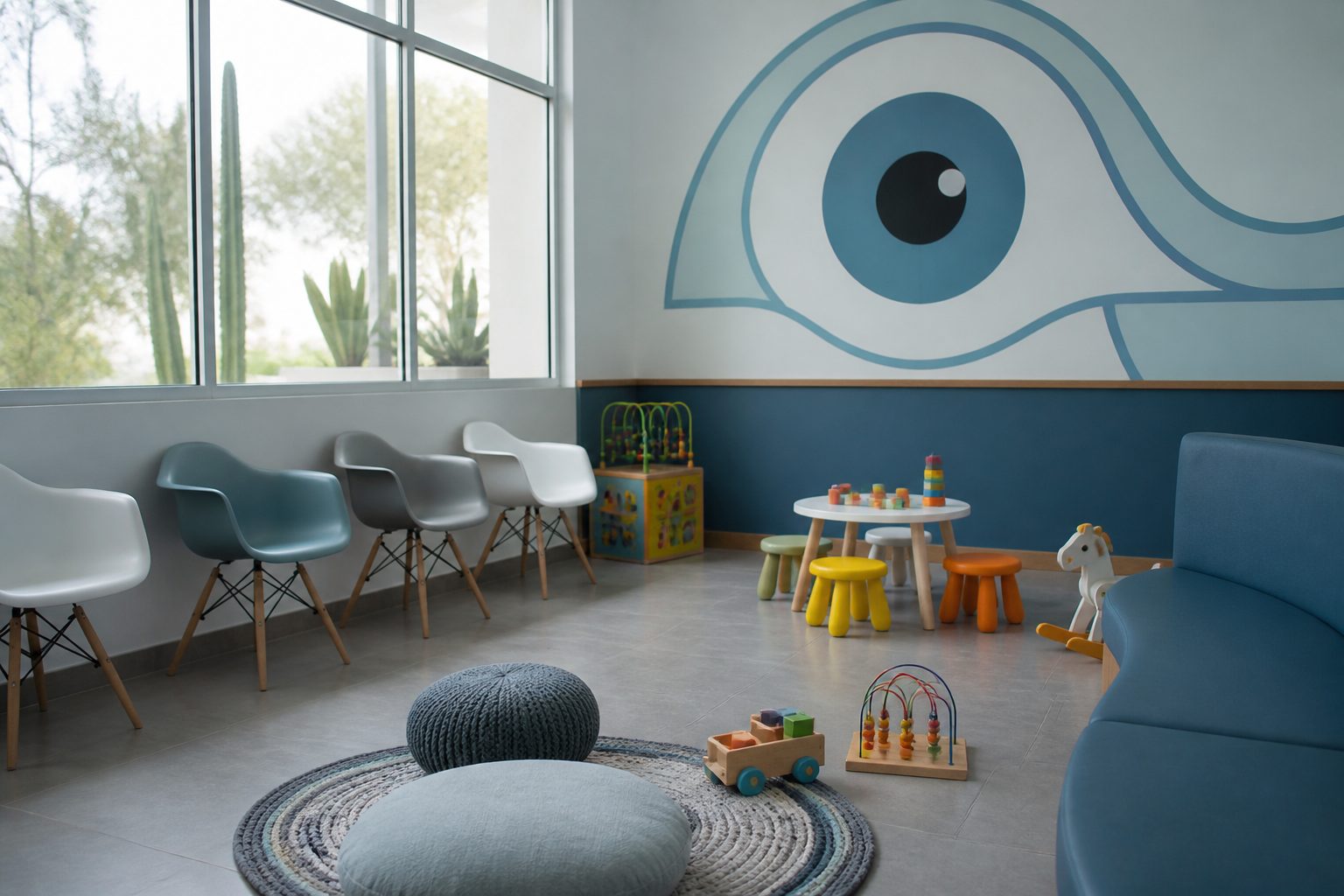
Parents looking for affordable child vision therapy often find Mexico offers high-quality care at a fraction of US prices. Most families pay $50-$100 per session, with significant savings on longer treatment plans.
This guide explains the costs, what’s included, how to choose a reputable clinic, and practical tips for international families considering child vision therapy in Mexico.
What is child vision therapy and who needs it
Child vision therapy is a non-surgical treatment program designed to correct or improve visual skills and processing problems in children. It is commonly recommended for issues such as amblyopia (lazy eye), strabismus (crossed eyes), convergence insufficiency, focusing difficulties, and visual-motor integration problems. Children who struggle with reading, have poor hand-eye coordination, or display symptoms like frequent eye rubbing, squinting, or headaches may benefit.
Therapy usually involves a series of exercises performed in the clinic and at home, tailored to the child’s specific diagnosis. The goal is to strengthen the eye muscles, improve coordination, and address underlying neurological or processing issues. A pediatric ophthalmologist or optometrist will assess the child and create a personalized therapy plan.
Typical costs for child vision therapy in Mexico
The cost of child vision therapy in Mexico is among the most affordable in North America, making it a popular destination for families seeking quality care on a budget. On average, a single session costs between $50 and $100 USD (approximately MXN 850–1,700), though this can vary based on several factors such as the city, the clinic’s reputation, and the credentials of the specialist. For example, prices in Mexico City or Monterrey—where clinics often cater to international patients—may be at the higher end, while smaller cities or public hospitals may offer lower rates.
Most children require a series of sessions, typically ranging from 10 to 40 appointments, depending on the diagnosis and the severity of the visual issue. The frequency of sessions is usually weekly or biweekly, with each session lasting 45–60 minutes. Some clinics offer discounted rates or package deals if you prepay for a set number of sessions, which can further lower the per-session cost.
Initial consultations, which include a comprehensive pediatric eye exam and functional vision assessment, usually cost $60–$120 USD (MXN 1,000–2,000). This fee covers the initial evaluation and the creation of a personalized therapy plan. Additional costs may arise if the specialist recommends advanced diagnostic tests, such as visual field analysis or imaging, or if your child needs a custom home therapy kit for exercises outside the clinic.
Compared to the United States—where sessions typically cost $150–$250 and insurance rarely covers vision therapy—the savings in Mexico are substantial. Families should also consider the cumulative cost for the entire course of treatment, including travel and accommodation if coming from abroad. However, even with these added expenses, many families find the total investment in Mexico is far less than what they would pay at home, without sacrificing quality or outcomes.
What’s included—and what’s not—in the cost
The overall price of child vision therapy in Mexico typically covers several core elements, but it’s important to understand exactly what you’re paying for before committing to a program. Most reputable clinics will bundle the therapist’s expertise, use of specialized equipment, and ongoing progress monitoring into their standard session or package fee. A typical vision therapy package in Mexico may include:
- Initial pediatric eye exam and diagnosis: This comprehensive assessment is conducted by a pediatric ophthalmologist or optometrist to determine your child’s specific vision challenges and to design an individualized therapy plan.
- Customized therapy program: Based on the initial diagnosis, the clinic will create a program tailored to your child’s needs, which may address issues like amblyopia, strabismus, convergence insufficiency, or visual processing problems.
- Supervised in-clinic exercises: These are hands-on therapy sessions using specialized tools and exercises, often involving computer-based activities, prisms, lenses, and other equipment.
- Progress assessment and periodic reports: Regular evaluations are performed to monitor your child’s improvement, with written reports provided to parents and, if needed, to schools or other healthcare providers.
However, not all expenses are included in the standard package. Some of the costs that may fall outside the base price are:
- Home therapy kits or materials: If your child requires exercises at home, you may need to purchase additional tools or software.
- Prescription glasses or contact lenses: If a new prescription is needed as part of the therapy, these are usually billed separately.
- Follow-up visits after the main therapy course: Some clinics include a set number of follow-up appointments, while others charge these as extra.
- Additional diagnostic imaging (e.g., OCT, visual field testing): Advanced imaging or specialized tests may incur added fees if deemed necessary by the specialist.
Always ask for a comprehensive written breakdown of what is and isn’t included before starting therapy. Some clinics in Mexico offer bundled packages that include all routine follow-ups, while others itemize each service. Understanding these details up front will help you budget accurately and avoid unexpected expenses during your child’s treatment journey.
How costs compare: Mexico and other countries
| Country | Session cost (USD) | Initial assessment (USD) | Typical total for 20 sessions |
|---|---|---|---|
| Mexico | $50–$100 | $60–$120 | $1,060–$2,120 |
| United States | $150–$250 | $200–$300 | $3,200–$5,300 |
| Canada | $100–$180 | $120–$200 | $2,120–$3,800 |
| India | $20–$40 (₹1,600–3,300) | $30–$60 (₹2,500–5,000) | $430–$860 (₹36,000–72,000) |
| Philippines | $25–$45 (₱1,400–2,500) | $35–$70 (₱2,000–4,000) | $535–$970 (₱30,000–55,000) |
| UK | $120–$220 (£95–£175) | $180–$300 (£140–£235) | $2,580–$4,700 (£2,060–£3,750) |
| Germany | $110–$200 (€100–€180) | $150–$250 (€135–€225) | $2,350–$4,250 (€2,120–€3,850) |
| Indonesia | $18–$35 (Rp 280,000–550,000) | $25–$45 (Rp 400,000–700,000) | $385–$745 (Rp 6–11 million) |
Mexico offers a mid-range price: higher than India or the Philippines, but far below the US, Canada, or Western Europe. The quality of care in leading Mexican clinics is comparable to the US, with many specialists trained internationally or holding dual certifications.
How to choose a reputable clinic or hospital
Start by searching for child-focused eye clinics or pediatric ophthalmology departments in major Mexican cities such as Mexico City, Guadalajara, or Monterrey. Look for clinics affiliated with established children’s hospitals or those with a dedicated pediatric optometrist or ophthalmologist on staff.
Check for accreditation by Mexican health authorities (COFEPRIS) and, if possible, international standards like JCI. Ask about the specialist’s training, years of experience with pediatric cases, and whether they routinely treat international patients. Request references or testimonials from other families, and confirm that the clinic provides documentation in English if needed.
Reputable clinics will offer clear pricing, transparent treatment plans, and regular progress updates. Avoid facilities that guarantee results—vision therapy outcomes depend on the child’s condition and cooperation over time.
What to expect during treatment
After an initial assessment, your child will receive a tailored therapy plan. Sessions typically last 45–60 minutes, with a combination of supervised exercises, computer-based activities, and hands-on tasks to improve specific visual skills. Most programs require weekly or twice-weekly visits over several months.
Parents are often encouraged to participate, learning how to support exercises at home. Progress is reviewed every few weeks, and the therapy plan may be adjusted based on improvements or challenges. Clinics usually provide written progress reports and guidance for maintaining gains after the program ends.
Children should wear their prescribed glasses or contacts during therapy, if applicable. For families traveling from abroad, some clinics offer condensed therapy schedules or can coordinate with local therapists for ongoing care after your return home.
Hidden costs and how to avoid them
Despite the generally transparent pricing of vision therapy sessions in Mexico, families may encounter unexpected or hidden costs if they are not careful. These extra expenses can quickly add up, especially for international patients or those requiring more complex care. Common hidden costs include:
- Specialized diagnostic tests: While a basic eye exam is usually included, advanced imaging (such as optical coherence tomography or visual field testing) may be recommended and billed separately.
- Custom therapy tools or software for home use: Some children benefit from take-home kits, digital apps, or printed exercise materials that are not part of the standard package.
- Additional follow-up visits: After the main program ends, periodic check-ins may be necessary to monitor progress or adjust the therapy plan. These are sometimes not bundled in the initial quote.
- Prescription eyewear or vision aids: If your child needs new glasses, contact lenses, or special lenses as part of their therapy, these will be an extra expense.
- Travel, accommodation, and meals: For families coming from other cities or countries, costs for flights, lodging, transport, and food can be significant, especially for multi-session programs that require extended stays.
To avoid these hidden costs, take the following practical steps:
- Request a full written quote: Ask the clinic for a detailed estimate that specifies exactly what is included in the therapy package and what is considered an additional charge.
- Clarify remote services and translation: If you are an international patient, confirm whether the clinic offers telehealth consultations, remote follow-up, or translation services, and if there are any fees for these extras.
- Plan for travel-related expenses: Factor in transportation and accommodation costs, and ask the clinic if they have partnerships with local hotels or can assist with logistics to reduce your expenses.
- Keep all receipts and documentation: This is especially important if you hope to claim reimbursement from insurance or need to submit proof of treatment to schools or health authorities.
By being proactive, asking detailed questions, and getting all agreements in writing, you can significantly reduce the risk of unexpected costs and ensure your child’s vision therapy experience in Mexico is both effective and affordable.
How to save on child vision therapy in Mexico
There are several practical ways to reduce the overall cost of child vision therapy in Mexico, making it even more accessible for families. Many private clinics offer discounts for upfront payment, for enrolling multiple siblings, or for purchasing multi-session packages. These bundled deals can lower the per-session rate and help families budget more effectively for the entire course of therapy.
Another option is to explore public hospitals or government-sponsored clinics, particularly those affiliated with universities or pediatric hospitals. These facilities often have lower fees but may involve longer wait times and limited availability of English-language support. If you are planning to combine vision therapy with a family holiday, consider scheduling appointments in tourist-friendly cities like Cancun, Guadalajara, or Mexico City, where you can find a range of family accommodations and activities, potentially offsetting some of your travel expenses.
If your child’s school or a local health authority requires documentation, ask the clinic to provide reports in both Spanish and English. This can save you time and money on translation services and ensure your child’s therapy is recognized by educational or health systems in your home country. Additionally, some international insurance plans or health savings accounts may reimburse part or all of the cost of vision therapy abroad. Contact your insurer before you travel to confirm coverage, required documentation, and reimbursement procedures. Always keep all receipts and medical records for your claim.
For longer stays, look for family-friendly accommodation near the clinic or hospital, which can reduce transportation costs and stress. Some clinics have partnerships with local hotels or guesthouses and may help you arrange discounted rates or shuttle services. By planning ahead, comparing options, and asking about available discounts and support services, families can make child vision therapy in Mexico both affordable and convenient.
Planning your trip: practical tips for families
Start by gathering your child’s medical history, previous eye exams, and any vision therapy records. Contact your chosen clinic well in advance to schedule an assessment and discuss your travel dates. Ask about visa requirements for your nationality; most tourists receive a 180-day entry permit on arrival, but check current rules.
Major cities like Mexico City, Guadalajara, and Monterrey have strong medical infrastructure and international airports. If your child has special needs or mobility issues, confirm accessibility at the clinic and your accommodation. Bring familiar toys or comfort items to help your child feel at ease during sessions.
Some families combine appointments with sightseeing or language immersion experiences. Make sure to allow time for rest, especially if your child tires easily. Plan meals carefully if your child has dietary restrictions. Carry a basic health kit and ensure your travel insurance covers medical care in Mexico.
Bottom line: is it worth traveling to Mexico for child vision therapy?
For many families, traveling to Mexico for child vision therapy can be a practical and cost-effective solution, especially when compared to the high out-of-pocket expenses often encountered in the United States, Canada, or Europe. In Mexico, the average cost per session is significantly lower, and families can often access highly qualified pediatric vision specialists who are accustomed to treating both local and international patients. Mexico’s larger cities—such as Mexico City, Guadalajara, and Monterrey—are home to modern clinics equipped with advanced diagnostic and therapeutic technology, and many staff speak English or provide translation services, making the process smoother for foreign visitors.
Families considering this option should factor in not only the cost of therapy itself, but also travel expenses, accommodation, meals, and any necessary visas or documentation. However, even after accounting for these additional costs, the total expenditure is often much less than the equivalent treatment in the US, where vision therapy is rarely covered by insurance and sessions can cost two to three times more. Furthermore, wait times for appointments in Mexico are typically shorter, allowing children to begin treatment sooner, which can be critical for effective outcomes.
To maximize benefits and minimize risks, families should thoroughly research clinics and specialists, read verified patient reviews, and request all arrangements and cost breakdowns in writing. It’s essential to consult your child’s primary eye doctor or pediatrician before making travel plans, to ensure the chosen therapy is appropriate and to coordinate ongoing care. With careful planning, Mexico’s combination of affordability, skilled professionals, and family-friendly cities makes it a strong choice for families seeking accessible, high-quality vision therapy for their children.
Frequently asked questions
How long does child vision therapy usually take?
Most children attend 10–40 sessions, typically once or twice a week. The exact number depends on the child’s diagnosis, age, and response to therapy. Your specialist will review progress every few weeks and adjust the plan as needed.
Is vision therapy in Mexico safe and effective?
Yes, when provided by qualified pediatric ophthalmologists or optometrists, vision therapy in Mexico is safe and uses evidence-based methods similar to those in the US or Europe. Always check the clinic’s credentials and ask about staff training and experience.
Can international patients get reports in English?
Many leading clinics in major cities can provide reports, treatment plans, and invoices in English for international families. Confirm this in advance, especially if you need documentation for insurance or your child’s school.
Will insurance cover vision therapy abroad?
Some international health insurance plans reimburse vision therapy overseas, but many do not. Check with your insurer before traveling, and request itemized receipts and medical documentation in English if you plan to submit a claim.
What if my child needs glasses or contacts as well?
Prescription eyewear is not typically included in therapy costs. Most clinics can arrange for your child to be fitted with glasses or contacts, usually at lower prices than in the US. Bring a recent prescription if possible, or plan for a new eye exam on arrival.
Related guides
Disclaimer: Prices in this guide are indicative and will vary by clinic, city, and your child’s individual needs. Always request a written quote and consult a qualified specialist before making treatment or travel decisions.